Precise inner diameter matching is key to liquid cooling deployment; 8/10/12mm flexible hoses cover
2026-07-21 14:10:13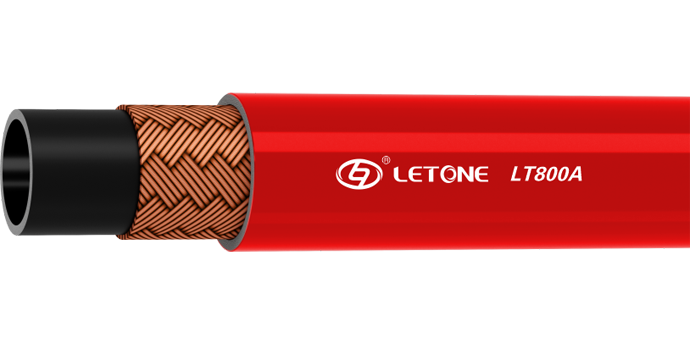
The "millimeter-level" adaptability of liquid cooling systems is an essential requirement.
With the widespread adoption of high-density computing clusters, server liquid cooling systems have long since moved beyond the stage of broad-based general-purpose pipe selection and entered an era of refined matching with millimeter-level precision. Different power CPUs and GPUs, and rack manifold branches of varying lengths, have completely different requirements for the inner diameter and flow rate of the flexible hoses. Choosing the wrong hose diameter can lead to insufficient cooling efficiency and soaring system power consumption, or even triggering localized hotspots and hardware crashes. The three standardized inner diameter specifications of 8/10/12mm precisely cover the flow rate requirements of most current mainstream server liquid cooling scenarios, making them the most widely used pipe selection in the industry.
Precise Scenario Division of Different Inner Diameters
8mm inner diameter flexible hoses are better suited for short-distance connections of single-path low-power cold plates, such as small cold plate branches for a single CPU. They offer flexible cabling in confined spaces and don't occupy excessive cabling space within the rack, making them particularly advantageous in liquid cooling retrofits for edge computing servers and small storage nodes. 10mm inner diameter flexible hoses are the current mainstream specification, balancing flow and pressure drop, perfectly adapting to the cold plate loops of most dual-path standard servers. In mass deployments in medium to large-scale data centers, they ensure sufficient heat dissipation flow without unnecessary pump energy waste. 12mm inner diameter flexible hoses are designed for high-power scenarios, specifically serving hardware with extremely high heat flux density such as AI computing clusters and supercomputing nodes. High flow rates deliver stronger heat exchange capabilities, quickly removing concentrated heat generated by high-load operation.
Long-Term Maintenance Benefits of Standardized Specifications
These three types of standardized inner diameter liquid cooling hoses also bring significant convenience to the long-term operation and maintenance of data centers. The unified standard interface compatibility allows for flexible interchangeability of hoses from different batches and deployment stages, eliminating the need to maintain large inventories of spare parts for niche or special specifications and significantly reducing spare parts management costs for operations and maintenance. Meanwhile, mature standardized processes ensure more stable dimensional accuracy and uniform wall thickness for these three types of inner diameter hoses, preventing issues such as localized thinning and insufficient pressure resistance. This reduces the risk of leakage in the liquid cooling circuit from the very beginning of mass deployment, laying a solid foundation for the long-term stable operation of the entire cluster.