Adapting to full rack cabling needs, 8/10/12mm inner diameter liquid cooling hoses solve pain points
2026-07-21 14:27:02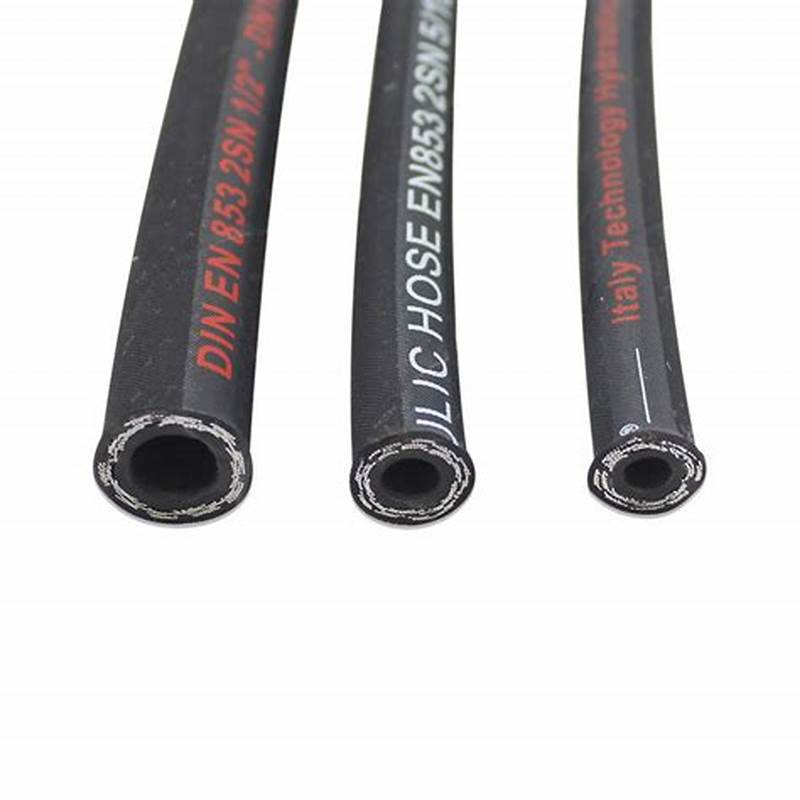
Caching Challenges Inside Server Racks
Server racks have compact interior spaces. Connections between cold plates, manifolds, and distributors often need to bypass multiple obstacles such as power supply modules and cable trays. Ordinary non-standard inner diameter hoses are either too thick to bend flexibly in confined spaces, or too thin to meet heat dissipation requirements, creating significant additional workload for on-site deployment. The 8/10/12mm inner diameter specifications, proven through numerous projects, perfectly solve the core pain point of complex cabling within racks due to their adaptability to different scenarios.
Deployment Advantages in Different Scenarios
The smaller overall outer diameter of the 8mm inner diameter hose allows for a very small bending radius, easily passing through pre-drilled cable routing holes on the rack side panel. In close-range connections between adjacent server nodes, no large cabling space is required, making it particularly suitable for high-density liquid cooling retrofits of blade servers, without causing space conflicts with power and signal cables within the rack. The 10mm inner diameter flexible hose achieves a perfect balance between flexibility and flow rate. It can easily handle cross-layer cabling from the top manifold to the middle server within a standard server rack, without issues like hose kinking or flow channel blockage. It is currently the most widely used specification in newly built liquid-cooled data centers. While the 12mm inner diameter flexible hose is larger, its structural strength is also optimized. In long-distance rack main-branch connections, it will not collapse, stably maintaining high flow rates and is specifically designed for the main circuit connections of high-power AI racks.
Long-Term Reliability Guarantee
These three types of standardized inner diameter liquid-cooled hoses have undergone rigorous dimensional verification during mass production, with inner diameter tolerances controlled within a very small range, preventing excessive flow rate differences even within the same specification. The unified size standard also significantly improves the compatibility of matching quick-connect fittings, clamps, and other connectors, eliminating interface misalignment and poor sealing issues during on-site installation, reducing the risk of leakage from the installation stage. This combination of deployment flexibility and operational reliability makes 8/10/12mm inner diameter liquid cooling hoses the optimal pipeline choice for current liquid-cooled data center construction, balancing short-term construction efficiency with long-term operational stability.