The Essential Need for Fluid Transportation in Highly Corrosive Conditions: PTFE Acid and Alkali Res
2026-07-23 14:16:44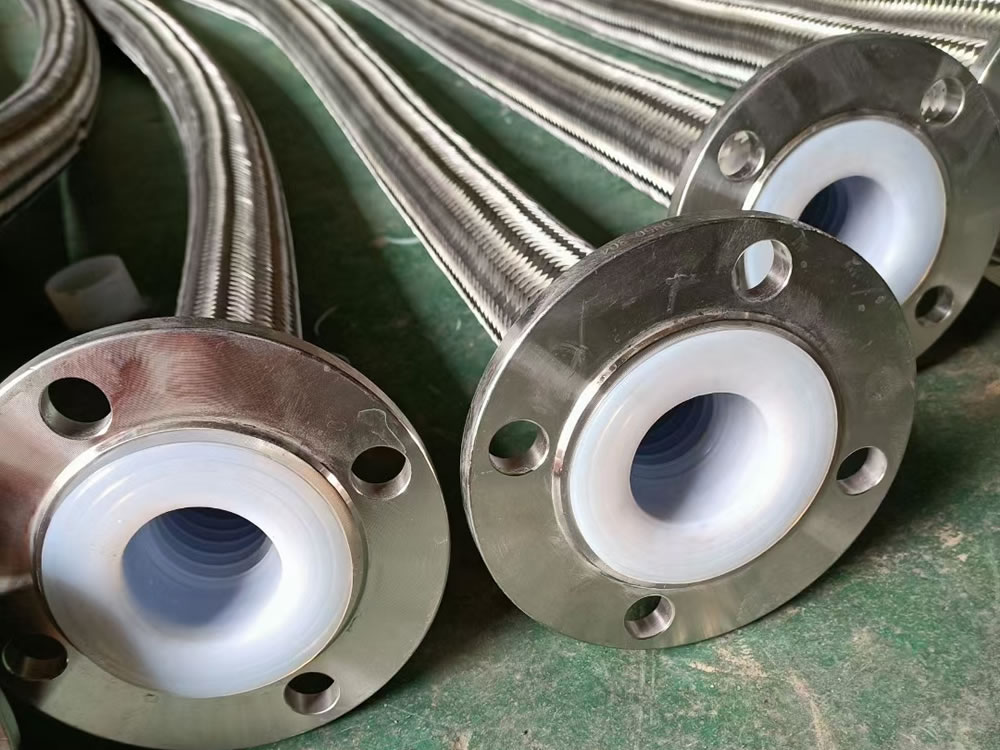
The Pain Points of Fluid Transportation in Highly Corrosive Scenarios
In the production processes of industries such as fine chemicals, pharmaceuticals, and hydrometallurgy, the transportation of various strong acids, strong alkalis, and highly corrosive organic solvents has always been a core challenge for fluid systems. Ordinary rubber hoses and metal hoses often experience problems such as internal wall swelling, rusting and perforation, and media contamination within a short period when faced with these highly corrosive media. This not only causes material leakage and losses but may also lead to serious safety accidents such as splashing corrosive media and burns to personnel. The emergence of PTFE acid and alkali resistant hoses has fundamentally solved the industry's pain point of long-term stable transportation of highly corrosive media, becoming a core fluid component in high-risk chemical production scenarios.
The Natural Corrosion Resistance Advantages of PTFE Material
PTFE, or polytetrafluoroethylene, achieves chemical inertness against almost all highly corrosive media due to its unique molecular structure. Except for a very few extremely corrosive substances, most concentrated acids, concentrated alkalis, and strong organic solvents cannot dissolve, swell, or corrode PTFE material. Even under long-term high-temperature conditions, it maintains absolute stability of its material properties. Acid and alkali resistant hoses with PTFE inner tubes completely overcome the shortcomings of ordinary rubber hoses in terms of poor corrosion resistance. They will not react chemically with the highly corrosive media being transported, and will neither be corroded or damaged by the media nor release impurities into the media, causing material contamination.
Long-term Value of Cost Reduction and Efficiency Improvement Throughout the Lifecycle
In continuous chemical production scenarios, PTFE acid and alkali resistant hoses can significantly reduce the maintenance pressure of fluid systems. Its aging resistance and service life are much longer than ordinary rubber hoses, eliminating the need for frequent shutdowns to replace pipes and greatly reducing production line interruptions caused by pipe maintenance. At the same time, its extremely low coefficient of friction on the inner wall ensures that corrosive media will almost never adhere to the wall or crystallize during transportation, maintaining a stable flow rate even during long-term operation, without problems such as flow channel blockage or decreased transportation efficiency. This combination of extreme corrosion resistance and long-term stability makes it the optimal fluid transport option for highly corrosive environments, balancing production safety and operational efficiency.